


The search for a Kabyle wedding dress is not just a fashion trend. It touches on something much deeper: identity, heritage, femininity, celebration, and elegance. When a woman looks for a Kabyle dress for a wedding, she doesn’t just want “a beautiful dress.” She seeks an outfit that respects a legacy, enhances her silhouette, marks the event, and remains photogenic from every angle. This is exactly why this topic deserves a real guide, not empty content that lines up three clichés about the Algerian dress without helping to make a real choice.
The problem is that many contents talk about the Kabyle wedding dress superficially. They repeat that it is “traditional,” “magnificent,” “colorful,” but they almost never explain what really matters: how to choose between a structured or flowing cut, how to think about the outfit according to the role in the ceremony, how to prevent a richly embroidered dress from fitting poorly over the stomach or hips, how to balance tradition and modernity, and especially where to find Kabyle dress without wasting absurd amounts of time between unclear shops, Instagram, alterations, and unpleasant surprises.
In this guide, we will do things properly. We will talk about the Kabyle wedding dress in its real context: the bride, the guest, the family, the ceremony, the difference with the Chaoui dress, the importance of the traditional Algerian dress, the selection criteria, the sites to consult, and how to achieve a cleaner fit under the outfit. Because let's be honest: a sumptuous dress immediately loses its impact if the base layer under the dress is poorly thought out. This is precisely where a smart shaping solution can make a difference, especially under a fitted dress, a traditional belt, or a cut that defines the waist.
Verdict in 30 seconds
- The Kabyle wedding dress remains a strong, cultural, and visually spectacular outfit, but it must be chosen according to the ceremony, cut, and desired look.
- The Kabyle wedding dress does not follow the same logic as a guest outfit: the level of detail, visual presence, and overall structure must be more controlled.
- Kabyle dress, Chaoui dress, traditional Algerian dress belong to the same festive world, but they do not express exactly the same stylistic codes.
- Where to find a Kabyle dress? You need to target truly specialized shops and check the cut, finishes, alterations, delivery times, and photos of the dress being worn.
- Under a Kabyle wedding dress, a well-chosen shaping shorts or shaping bodysuit can immediately improve the drape and smooth the silhouette without breaking the outfit’s style.
Summary
Everything you need to know to choose, wear, and enhance a Kabyle wedding dress with a truly elegant result.
- Kabyle wedding dress: why this outfit remains essential
- Kabyle dress for the bride: how to choose an outfit worthy of the big day
- Algerian dress and traditional Algerian dress: what role do they play in a wedding
- Chaoui dress and Chaoui outfit: what are the differences with the Kabyle world
- Where to find a Kabyle dress: websites, shops, and smart tips
- Kabyle wedding dress for guests: how to be elegant without stealing the spotlight
- Traditional Kabyle wedding dress: should you stay classic or modernize the silhouette
- BESHAP flat stomach shaping solution under a Kabyle wedding dress
- Two BESHAP products suitable under a Kabyle dress
- Mistakes that ruin the look of a Kabyle wedding dress
- FAQ — Kabyle wedding dress
1) Kabyle wedding dress: why this outfit remains essential

The Kabyle wedding dress is not an interchangeable outfit. It has an immediate visual presence. Embroidery, color play, trims, jewelry, belt, hairstyle, possible layering: all contribute to creating a strong ceremonial silhouette. This is precisely why the search for Kabyle wedding dress remains so active. The woman interested in it is not just looking for a “pretty” dress. She wants a garment capable of carrying an important family, cultural, and emotional moment.
What makes a Kabyle wedding dress powerful is its ability to combine aesthetic richness and cultural roots. While modern ceremonial dresses focus solely on the cut, the Kabyle dress can tell a deeper story: a region, a memory, a heritage, a way of experiencing the event. This is also why it remains visually striking in photos and videos. It doesn’t blend into the background. It commands a sartorial language.
But we must stop approximations. Not all Kabyle wedding dresses are equal. Some look magnificent in product photos but are too heavy, too stiff, poorly finished, or unbalanced once worn. Others have the right level of detail but a poor cut. So the issue is not just finding a Kabyle dress. The issue is finding a dress that holds visually on the body, respects the spirit of the outfit, and supports the posture of the wearer.
2) Kabyle bridal dress: how to choose an outfit worthy of the big day
The Kabyle bridal dress must do more than just be beautiful. It must prioritize presence. A bride cannot appear “like a very well-dressed guest.” There needs to be an extra level of distinction. This comes through the quality of fabrics, the accuracy of colors, the workmanship of the finishes, the choice of accessories, and above all the overall coherence of the silhouette. If the dress is sumptuous but the waist fits poorly, the belly shows, or the belt visually breaks the line, the result loses its nobility.
The right approach is to start from the role of the dress in the ceremony. Is it a central piece of the wedding? An outfit for a dress change? A very traditional dress or a more contemporary one? A bride who wants a majestic look will not have the same needs as a bride who wants a lighter, cleaner, more modern style. Some will prefer marked sleeves, abundant embroidery, and a structuring belt. Others will look for a more fluid, elongated, less bulky look.
You also have to think about movement. A Kabyle wedding dress is not judged only when standing still. It is judged when entering, moving, sitting, dancing, and in profile photos. This is where many average choices fall apart. A dress can look strong from the front but completely lose its side line. The bride must therefore seek not only the appearance but also control over the drape, the waist, and the belly-hip line.
3) Algerian dress and traditional Algerian dress: what role in a wedding

The keyword Algerian dress is broader than just the Kabyle dress. It refers to a world of wedding and festive outfits where several regional, stylistic, and ceremonial influences coexist. When a woman types traditional Algerian dress, she is often looking for an outfit with a strong identity, but she hasn’t always decided yet whether she will go for a Kabyle dress, Chaoui, a karakou, a revisited Algerian caftan, or a more contemporary interpretation of the ceremonial dress.
Within this ensemble, the Kabyle dress holds a very identifiable place. It stands out with a colorful, ornamental, and immediately recognizable imagery. But one essential point must be understood: the more culturally marked the dress is, the higher the demand for coherence. You can’t treat a traditional Algerian dress like a simple evening gown. Accessories, hairstyle, makeup, posture, and the underskirt must all follow.
In other words, a well-worn Kabyle dress is never just “a pretty dress.” It’s a complete visual construction. And that’s why it can be extremely powerful when well thought out, but much less convincing when improvised or poorly fitted.
4) Chaoui dress and Chaoui outfit: what are the differences with the Kabyle world
In searches related to the Kabyle wedding dress, you often find Chaoui dress and Chaoui outfit. This makes sense: women often explore several traditional worlds before choosing the outfit that best fits their wedding, family, region, or desired effect. Visually, these worlds can share a strong ceremonial intensity, an attachment to tradition, and a taste for ornamentation.
But the right strategy is not to mix everything. A proudly Kabyle dress must remain Kabyle in its visual language. A proudly Chaoui outfit must stay consistent with its own style. The trap is an aesthetic patchwork without a clear direction. It’s like trying to please everyone by combining codes that don’t properly interact. The result: the outfit loses strength.
The real question to ask is not “which tradition is the most beautiful?” The real question is “which silhouette, heritage, and presentation fit my wedding?” Once you have this answer, the choice becomes much clearer and the dress immediately gains impact.
5) Where to find Kabyle dresses: websites, shops, and smart habits
When looking for where to find Kabyle dresses, you need to stop randomly clicking on Pinterest images or social media accounts without a clear structure. What you need is a method. First, target shops that are genuinely focused on this world. Then, check the quality of worn photos, the clarity of the designs, the delivery policy, the possibility of alterations, the consistency of the finishes, and the overall credibility of the site.
Orientaletendance.com
Among the options to check out, Orientale Tendance has a dedicated category for Kabyle dresses and highlights original creations with a promise of fast delivery. This can be a useful base for comparing styles, embroidery, and levels of sophistication, especially if the goal is to explore several variants before making a decision.
Another option to consider, Boutique Many presents itself as a specialized destination for Kabyle dresses and traditional accessories, offering everything from traditional models to more modern creations for weddings, parties, and ceremonies. This is interesting for a woman who is torn between a very classic Kabyle wedding dress and a more contemporary version.
Robes-kabyle.fr
Finally, especially highlight international shipping, secure payment, and prominent customer service. This type of site can be relevant if the buyer is outside Algeria or wants to compare remote ordering options. That said, you must be strict: before buying, always ask for additional worn photos, exact measurements, actual delivery times, and the level of customization possible.
6) Kabyle wedding guest dress: how to be elegant without stealing the spotlight
The Kabyle wedding guest dress follows a different logic than the bride’s dress. It must be elegant, confident, and refined, but it should not directly compete with the main outfit of the wedding. In other words: you can be remarkable, but not dominant. This is a nuance many miss. They think avoiding excess means being dull. That’s false. A guest can be very beautiful with a better-balanced outfit, less theatrical, but more fitting.
For a guest, success often comes down to harmony. A well-cut Kabyle dress, with beautiful finishes, a controlled choice of colors, and a clean fall, will have more class than a model that’s too busy trying to make up for a lack of structure with an excess of ornamentation. The same goes for accessories. Style doesn’t come from the volume of details. It comes from coherence.
The same goes for the silhouette. A guest who wants to wear a close-fitting dress, cinched or defined at the waist, has every reason to consider the look under the outfit. Not to transform artificially, but to avoid unwanted marks, improve the line, and gain confidence throughout the ceremony.
7) Traditional Kabyle wedding dress: should you stay classic or modernize the silhouette

The debate between traditional Kabyle wedding dress and modernized version is often framed incorrectly. Two camps are opposed, when in reality it’s a spectrum. Some women want a dress deeply rooted in tradition, with strong cultural presence and visual respect for the codes. Others want to keep the Kabyle spirit while refining the cut, lightening some volumes, or modernizing the overall silhouette.
Neither approach is wrong. What’s wrong is inconsistency. A dress that is too traditional worn with a too “Instagram evening dress” logic can lose its impact. Conversely, a dress that is too modernized can become generic and lose what made it unique. So you have to choose your style with clarity: either you embrace the ceremonial richness, or you create a controlled contemporary version, but you don’t drift randomly between the two.
The smartest modernization isn’t always in the embroidery or color. It can be in the cut, the material, the flow, the precision of the drape, or the quality of the base layer under the dress. This is often where the outfit truly elevates.
8) BESHAP flat belly shapewear solution under a Kabyle wedding dress
Under a Kabyle wedding dress, especially when it is belted, fitted at the waist, or made from fabric that gently follows the curves, the question of what to wear underneath should not be taken lightly. It’s not about excessive compression or distorting the silhouette. It’s about smoothing the belly, improving support, and achieving a more harmonious drape. This is exactly where a BESHAP flat belly shapewear solution or a well-chosen shaping product becomes useful.
BESHAP notably highlights its women’s shaping shorts collection, presented as a category designed to slim the silhouette, flatten the stomach, sculpt the hips, and remain wearable under clothing, including under a dress. :contentReference[oaicite:3]{index=3} This is a particularly logical choice for a Kabyle wedding outfit because a good shaping short doesn’t try to steal the spotlight from the dress: it works quietly to improve the overall line.
The truth is simple. A stunning Kabyle dress with a well-defined waist can lose a lot of impact if the stomach isn’t well supported or if the fabric clings to certain areas. Conversely, a well-chosen dress worn with suitable underwear gains in sharpness, fluidity, and confidence. The right shapewear doesn’t replace the dress. It allows the dress to be at its best.
Because a Kabyle wedding dress naturally draws attention to the waist, bust, drape, and balance of the silhouette. If the base under the dress is poorly thought out, the outfit loses its precision. A well-chosen shaping short or shaping bodysuit mainly helps achieve a cleaner, more stable, and more elegant look without breaking the traditional aesthetic.
9) Two BESHAP products suitable under a Kabyle dress
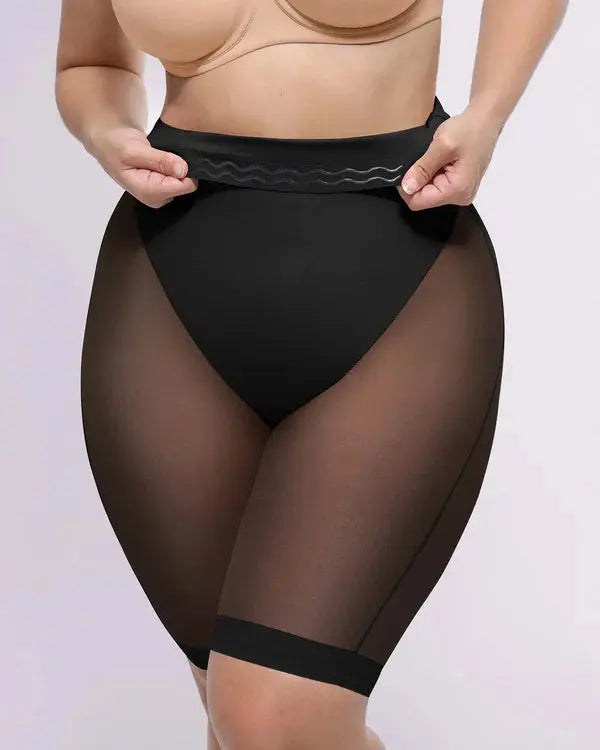
The AirSlim® is probably the most logical option for a woman who wants to smooth the stomach, slim the line under the dress, and maintain comfortable wear. The BESHAP product page presents this shorty as a solution that immediately smooths the stomach, slims the silhouette, remains invisible under clothing, and doesn’t roll up. :contentReference[oaicite:4]{index=4} Under a Kabyle wedding dress, it’s relevant when the priority is to have a discreet base, especially if the dress is belted or slightly fitted at the waist.
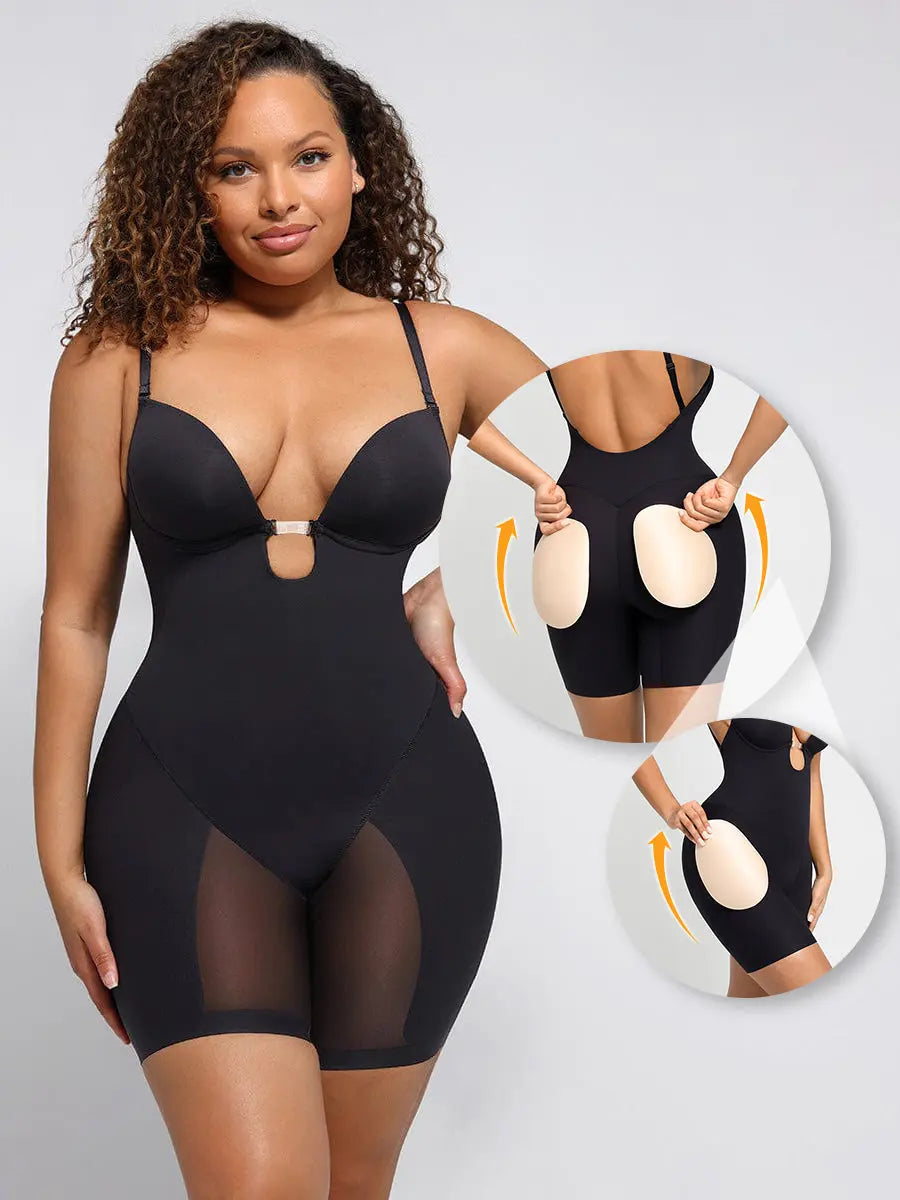
The Hipnexa® backless shaping bodysuit is better suited when you want more overall support on the stomach and waist, while still being compatible with dresses that leave the back more exposed or require a smoother line on the upper body. The product page emphasizes that it smooths the stomach, slims the waist, remains discreet under clothing, has a plunging back, and is suitable for backless dresses and tops. :contentReference[oaicite:6]{index=6} It is therefore a more complete option if the Kabyle wedding dress has a structure that demands a cleaner look across the central part of the silhouette.
10) Mistakes that ruin the look of a Kabyle wedding dress
- Choosing the dress before considering the actual drape: a stunning dress can work very poorly on the body if the waist-belly-hips line is not controlled.
- Confusing visual richness with overload: more embroidery does not automatically mean more elegance.
- Ignoring the role in the ceremony: a bride, a bride’s sister, and a guest do not aim for the same level of wardrobe presence.
- Neglecting profile photos: many outfits look strong from the front but lose their shape from the side.
- Wearing unsuitable underwear: visible seams, insufficient support, or uneven compression can ruin the look.
- Relying only on studio photos: you should always ask for as much real information as possible about the cut, fabric, size, and delivery times.
FAQ — Kabyle wedding dress
Clear answers to choose the right dress, avoid mistakes, and achieve an elegant look.
What is the difference between a Kabyle wedding dress and a Kabyle wedding guest dress?
The bride should aim for a more structured, memorable, and visually central outfit. The guest can remain very elegant but with a more balanced intensity to avoid competing with the main outfit.
Where to find a Kabyle dress for a wedding?
You can start by comparing specialized sites like Orientale Tendance, Boutique Many, or robes-kabyle.fr, then check the quality of worn photos, delivery times, and alteration options before ordering.
Does a Kabyle wedding dress have to be very traditional?
No. It can remain very traditional or be slightly modernized. What matters is the overall coherence of the silhouette and respecting the outfit's visual language.
Are the Chaoui dress and the Kabyle dress interchangeable?
Not really. They belong to related worlds by their traditional and ceremonial nature, but each has its own codes. It’s best to choose a clear line rather than mixing references without logic.
Which underwear to choose under a Kabyle wedding dress?
It all depends on the cut. Under a dress fitted at the waist, discreet shaping shorts may be enough. If the dress requires more overall support, a backless shaping bodysuit may work better depending on the back opening and the top’s structure.
Does shapewear distort a traditional Kabyle dress?
No, if it is well chosen. The goal is not to drastically change the silhouette but to improve the fall, smooth certain areas, and achieve a cleaner look under the dress.
Conclusion: the Kabyle wedding dress deserves better than an approximate choice
Choosing a Kabyle wedding dress is not just ticking an aesthetic box. It’s about building a presence. And this presence depends on several things: the strength of the dress, the smart choice, coherence with the role in the ceremony, the quality of the fall, and how the silhouette is supported. A beautiful Kabyle dress without real structure remains an incomplete promise. A slightly less spectacular dress but perfectly worn can create a much stronger impact.
If you are looking for a Kabyle wedding dress, a Kabyle guest wedding dress, or simply serious leads on where to find a Kabyle dress, keep this simple rule: never judge only the embroidery, judge the entire silhouette. And if your dress requires a smoother tummy, a sharper waist, or more discreet support, the right foundation under the outfit matters a lot. That’s exactly why a well-chosen BESHAP solution can make a difference under a Kabyle wedding dress.
Prepare your figure under your Kabyle dress
Discover the BESHAP collection designed to smooth the tummy, improve the dress's fall, and boost confidence on the wedding day.
Also to see on BESHAP:
Here are consistent contents and collections to strengthen internal linking around wedding dresses, flat tummies, and shaping solutions.